

Sleeve Gastrectomy
Sleeve gastrectomy, the most common (60%) technique in modern bariatric surgery, minimally invasively reduces the stomach from 800-1,000 ml to 100-150 ml. After a 45-60 minute procedure, patients are discharged in 2-3 days. It provides strong appetite control by reducing the hunger hormone ghrelin by 70-80%. In the first year, 60-70% of patients lose their excess weight. The complication rate is low (0.5-1% bleeding, 0.2-0.5% leakage) and only requires B12 and vitamin D supplementation.

Roux-en-Y Gastric Bypass
This gold standard of obesity surgery is particularly preferred for patients with uncontrolled diabetes and reflux. A 30-50 ml gastric pouch is created and the small intestine is rearranged in a Y shape. After a 1.5-2 hour procedure, a 3-4 day hospital stay is required. It achieves full remission in 85% of type 2 diabetic patients, 65-75% weight loss in the first year, and 98% improvement in reflux symptoms. B12, vitamin D, iron and calcium supplementation are essential.

Mini Gastric Bypass (Single Anastomosis Bypass)
This modern alternative to the classic bypass involves connecting a narrow gastric tube (2-3 cm x 15-18 cm) and a 180-200 cm intestinal segment in an omega shape. After a 60 minute surgery, patients are discharged within 48 hours. The internal hernia risk is below 0.5%. It corrects metabolic syndrome in 60-70% of patients and achieves 70-80% weight loss in the first year. B12, vitamin D and iron supplementation are required.
Biliopancreatic Diversion and Duodenal Switch
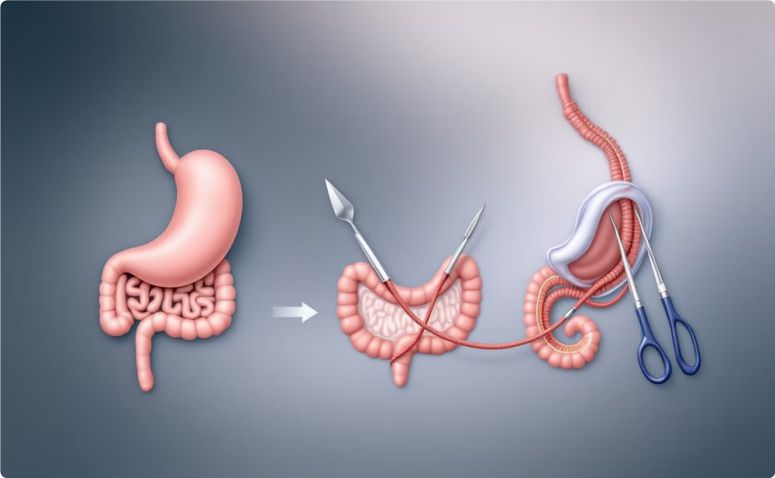
Preferred for super obese (BMI>50) patients, this complex procedure bypasses 75% of the small intestine after sleeve gastrectomy. It requires a 2-3 hour surgery and a 4-5 day hospital stay. It has the highest weight loss (70-80%) and diabetes remission (95%) rates. Due to the risk of protein deficiency (5-10%), a daily minimum of 60-80 grams of protein intake and comprehensive vitamin-mineral supplementation are mandatory.